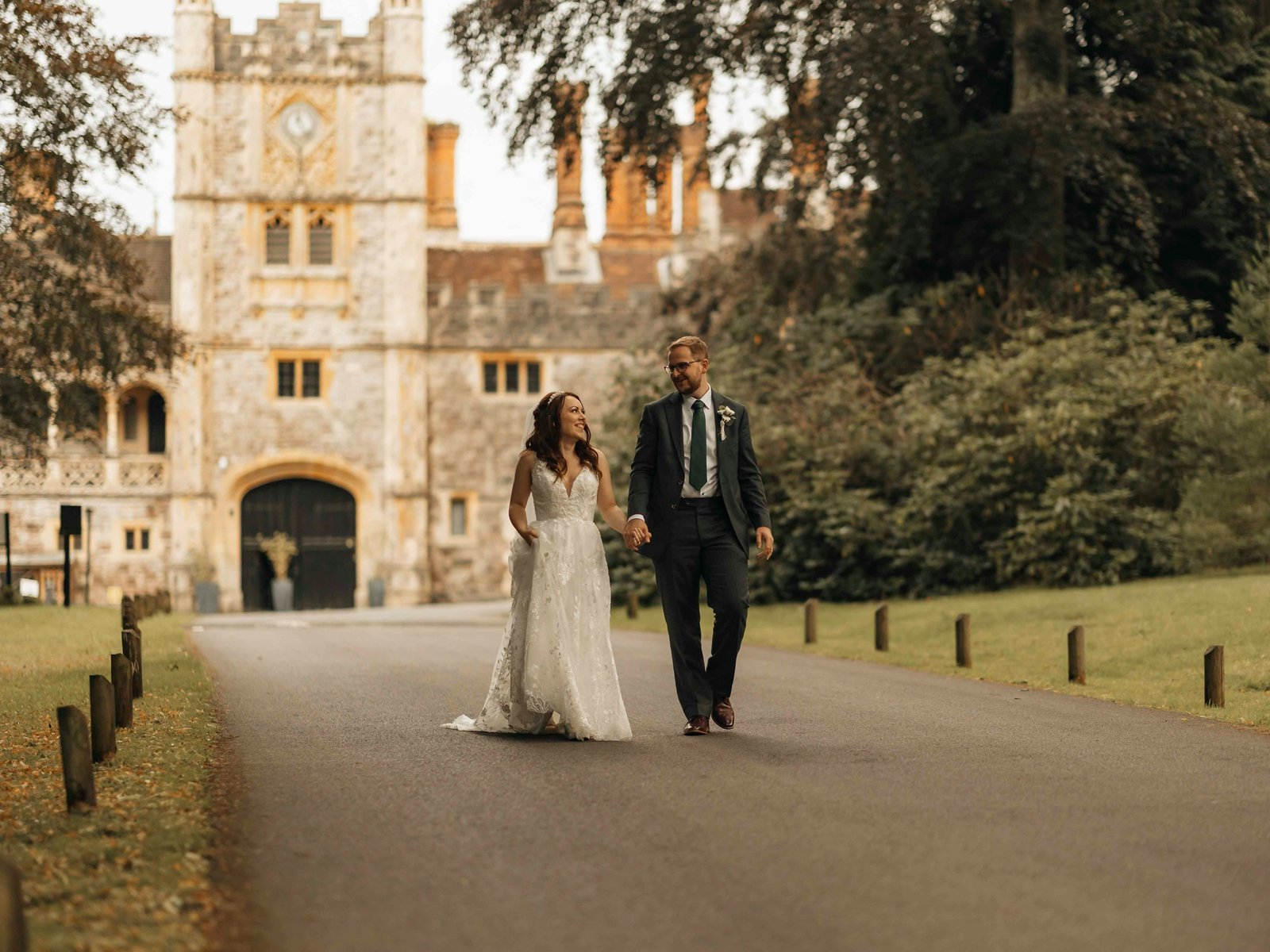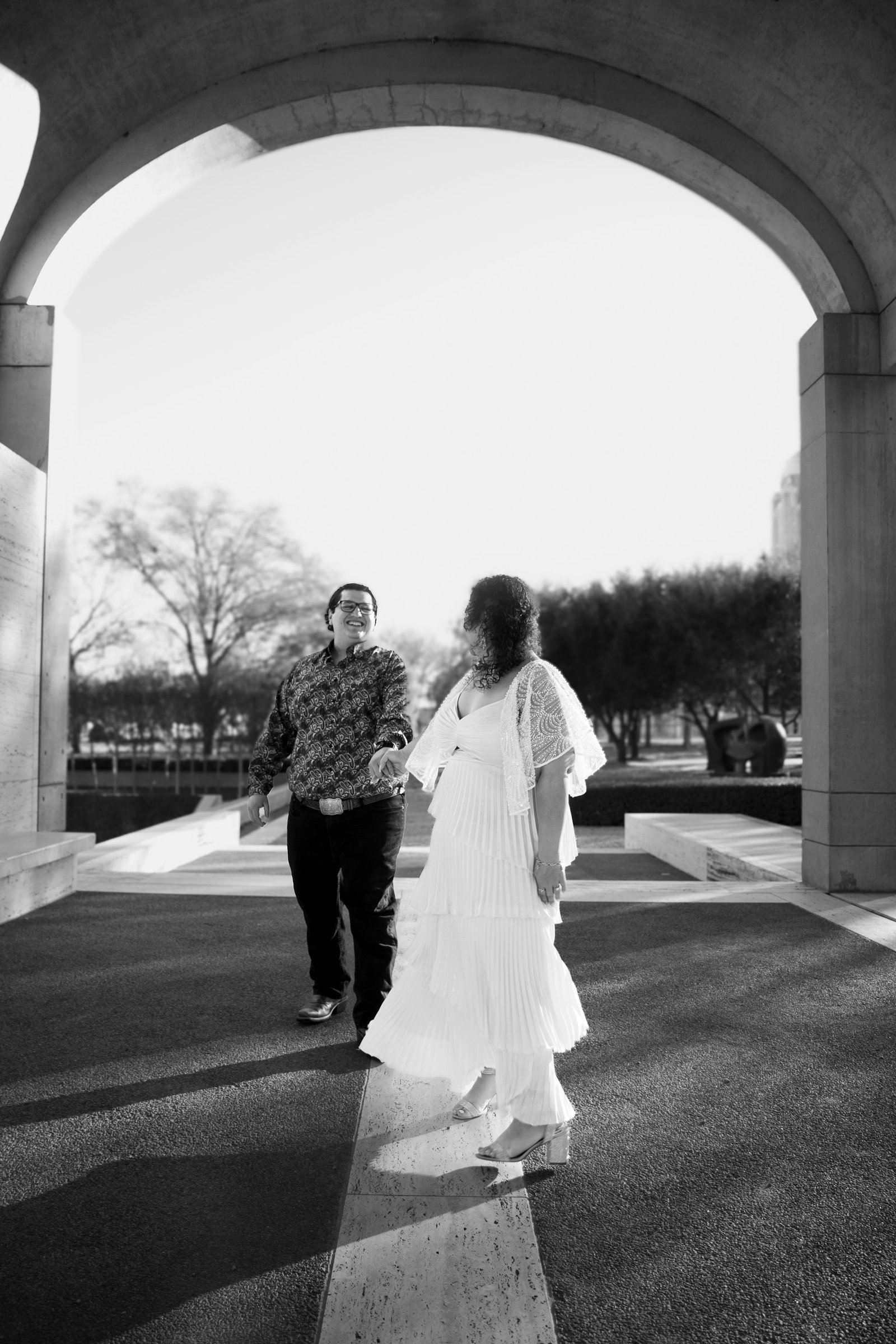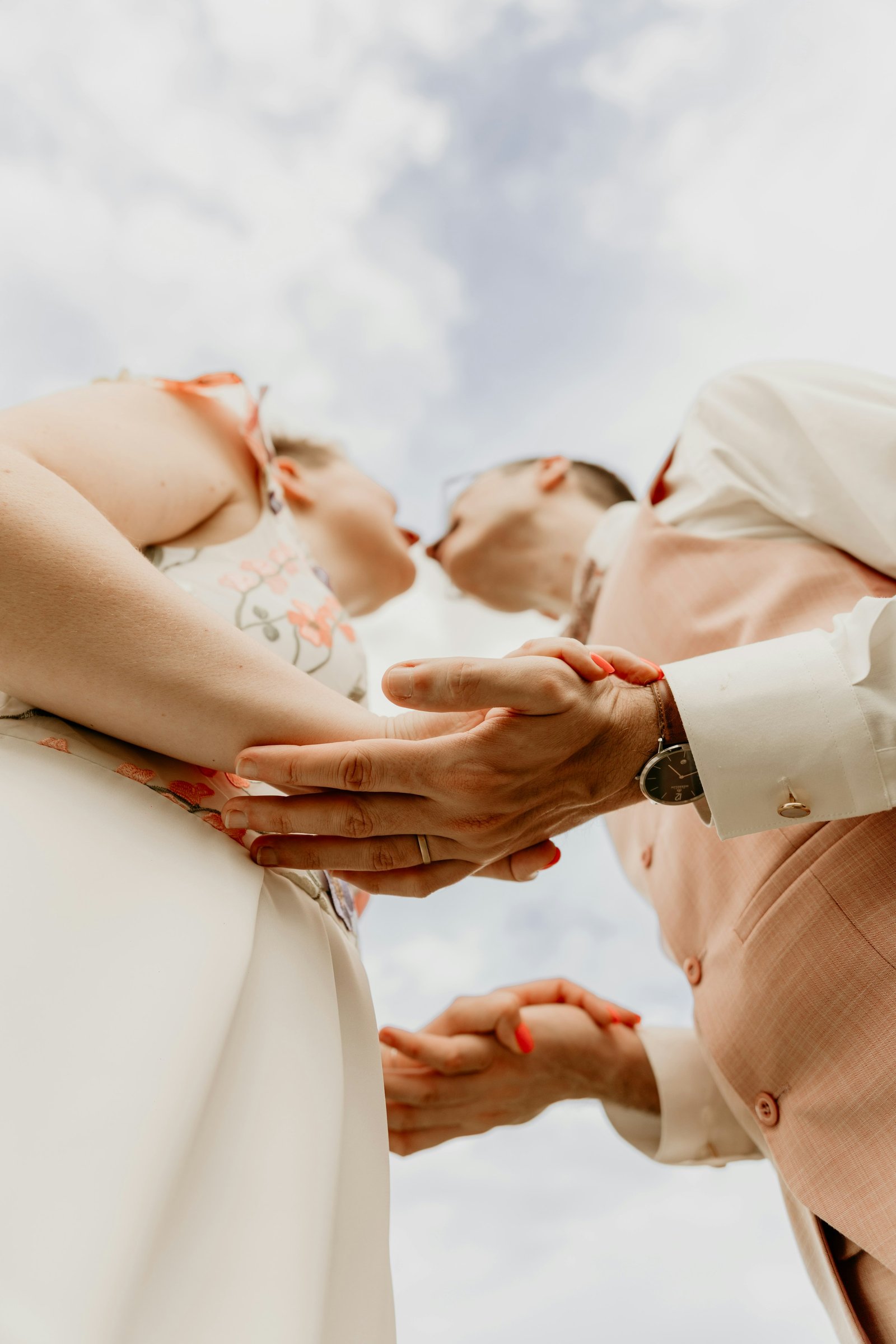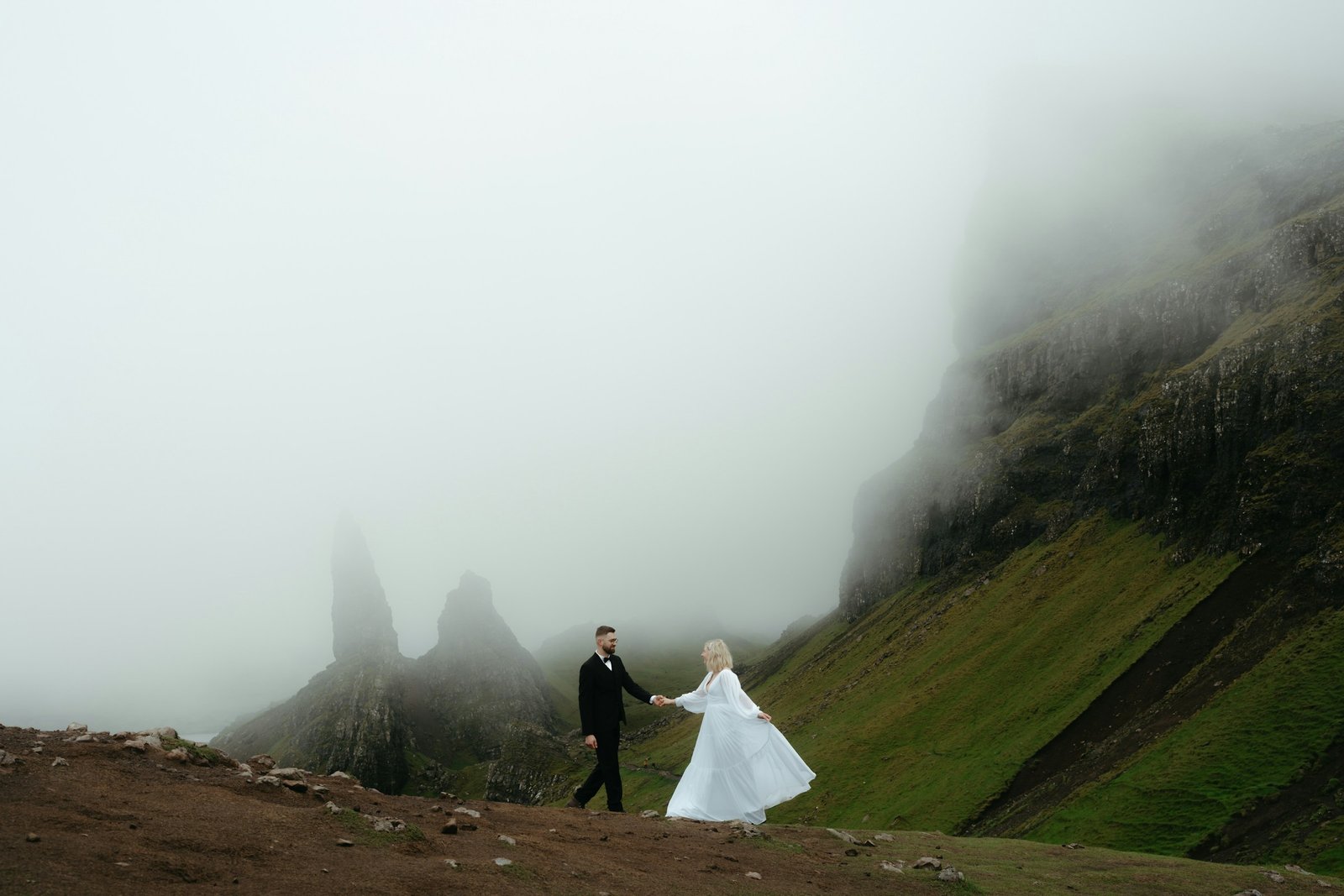
As photographers who regularly travel across the UK for weddings, we've worked in locations that genuinely stopped us in our tracks — cliff-top ceremonies in Cornwall, castle courtyards in the Scottish Borders, moorland ceremonies in the Yorkshire Dales with nothing but sky and heather in every direction. The UK's landscapes are extraordinary. They're just overlooked by people who assume you need to leave the country to find them.
This guide covers everything you need to know about planning the photography for a destination wedding in the UK — including the questions nobody tells you to ask.
The Best Destination Wedding Landscapes in the UK
Scotland: Castles, Highlands, and the Islands
Scotland offers the most dramatic diversity of any UK destination. Highland estates with views over lochs and mountains. Coastal castles battered by Atlantic weather. The otherworldly landscapes of Skye, Mull and the Outer Hebrides. Edinburgh's Georgian and medieval architecture for couples who want urban grandeur.
Photographically, Scotland is extraordinary — but plan around the weather. Scottish light in summer is spectacular and lasts incredibly late (after 10pm in June). Scottish autumn and winter weather can be severe and unpredictable.
Yorkshire and the North: Moors, Dales, and Industrial Architecture
Our home territory. The North York Moors, the Yorkshire Dales, the Pennines — vast, elemental landscapes that produce images of genuine grandeur. Yorkshire also has some of the country's finest country house hotels and historic barns, alongside the contrasting visual richness of cities like Leeds and York.
The light in the north is different to the south — lower, more directional, with a quality that lends itself particularly well to cinematic and documentary photography.
The Lake District: Water, Mountain and Light
England's most celebrated landscape. Windermere, Ullswater, Coniston — the Lake District produces images that are genuinely iconic. The challenge is accessibility and crowds. Spring and autumn weekdays are dramatically quieter than summer weekends. Venue choice matters enormously here — some locations require significant travel.
Cornwall and the West Country: Coastline and Heritage
Cornwall offers the UK's most dramatic coastal wedding photography — cliff-edge ceremonies, harbour town receptions, ancient standing stones in moorland settings. The light is different in the far southwest — clearer, brighter, with a Mediterranean quality in summer. Travel logistics need planning: Cornwall is remote and weekend traffic can be extreme.
Wales: Coastline, Castles, and Snowdonia
Wales is significantly underrated as a destination wedding location. Snowdonia's mountain landscapes rival the Scottish Highlands. The Pembrokeshire coast is among the most beautiful in Europe. Welsh castles — Caernarfon, Conwy, Harlech — offer a visual drama that's difficult to replicate anywhere else.
"We've photographed weddings from the Outer Hebrides to the Cornish coast. Every corner of this country has something extraordinary to offer the couple who looks for it."
What to Ask Your Photographer Before Travelling
Not every photographer is comfortable or experienced with destination work. Here are the questions that matter:
- Have you worked in this region before? Local knowledge — knowing where the light falls, where to position for portraits, which footpaths lead to the best views — makes a significant difference.
- What are your travel terms? Most photographers charge travel costs for weddings beyond a certain radius (typically 50–100 miles). Clarify whether accommodation is required for long-distance travel and who pays for it.
- Can you do a venue visit beforehand? For truly remote or unusual venues, a visit before the wedding day is valuable. Some photographers include this; others charge separately.
- What's your contingency if you can't travel? Extreme weather, transport disruption, and personal emergencies are all more likely when significant travel is involved. What is their backup plan?
Building Your Timeline Around the Location
Destination wedding timelines need to account for travel between locations — ceremony venue, portrait locations, and reception venue may all be separate sites requiring driving time. The more spread out your day, the more buffer time you need.
We always recommend walking through the full day timeline with us at least six weeks before, specifically with travel time mapped out. An extra 20 minutes can be the difference between arriving at your portrait location during golden hour or after it.
Practical Logistics: What Couples Often Forget
- Permits and permissions: Some location shoots — beach access, National Trust land, castle courtyards — require formal permission and sometimes a fee. Check with your venue and photographer well in advance.
- Footwear: Cliff-top locations, moorland paths, and coastal access often involve walking on uneven ground. Plan your footwear accordingly — or bring a change of shoes for the portrait walk.
- Weather contingencies: UK weather is what it is. Build indoor backup options into your venue choice wherever possible. A dramatic cloudy sky is often better for photography than harsh sun — but a horizontal rainstorm is nobody's friend.
- Getting guests there: Remote venues are beautiful but logistically challenging for guests. Organised transport, clear directions, and accommodation recommendations are more important than at a city venue.
We're based in Leeds but regularly travel across England, Scotland and Wales for weddings. Travel costs are discussed transparently at enquiry stage — for many UK destinations within a 150-mile radius, there are no additional charges. For Scotland, the far southwest, and remote island venues, we'll quote honestly based on the specifics of your day.
If you're planning a destination wedding anywhere in the UK and want to discuss what photography coverage would look like for your specific location and vision, take a look at our packages or get in touch directly. We'd love to hear about where you're planning to be married.